
ADHD, Dopamine, and Overeating: Why It’s Not About Willpower

Updated: Oct 6, 2025
The connection between ADHD and weight management - and the strategies I use
When it comes to ADHD and food, the struggles aren’t just about cravings or poor willpower. They’re about wiring. ADHD brains process stimulation, emotion, and motivation differently, and that has a direct impact on eating habits.
The link between ADHD and weight issues is undeniable, and it’s becoming a huge focus of research. Studies show that children with ADHD are around 40% more likely to be overweight, and adults may be up to 70% more likely to struggle with obesity. In fact, ADHD is estimated to be twice as common among children who are overweight compared to their peers of normal weight.
These aren’t small numbers; they highlight a clear, measurable connection between ADHD wiring and challenges with food, weight, and long-term health
⸻
My Lightbulb Moment as an ADHD person

I always felt my relationship with food was my fault; somehow, I should have had more willpower like others. I could clearly see my patterns were wonky, but I didn’t realise just how deeply ADHD was woven into those patterns.
" Living with ADHD often feels like having 100 tabs open in my brain at all times - constant noise, constant juggling, constant searching for relief."
When I was formally diagnosed three years ago, the pieces started to click into place - from my relentless sugar cravings to my chaotic sleep patterns to my struggles with impulsive food choices. It wasn’t weakness or lack of willpower. It was wiring.
And that’s what this blog is about: how ADHD symptoms show up in overeating, why the science makes sense, and what we can actually do about it.
If you’ve ever wondered why you reach for sugar when you’re bored, forget meals until you’re starving, or lose all motivation halfway through a diet plan, you’re not broken. You could be working with an ADHD brain.
I know this, because it’s my reality too.
⸻
Why ADHD Brains Crave Sugar and Stimulation
ADHD is often described as a “dopamine deficiency disorder.” Our brains don’t release or regulate dopamine consistently. Dopamine drives focus, motivation, and reward - so we go looking for it in other ways.
• Sugar = quick dopamine hit. For me, biscuits and chocolate used to be my go-to. They were instant comfort, a reward at the end of a stressful day, and sometimes the only thing that could cut through boredom.
• Addiction vulnerability. I’ve battled both food and alcohol addiction. Both gave me that same dopamine rush. And the truth is, my ADHD wiring made me more susceptible.

Now I create dopamine differently - through my dopamine wall (where I have photos and affirmations of my client wins to increase my dopamine), journaling in the sun, or even ticking something off my to-do list. The inner work I practice and teach for emotional eating and dealing with food noise is the exact work needed to work with ADHD.
⸻
Impulsive Eating: How ADHD Impacts Food Choices
" Impulsivity is part of ADHD life. I used to swing into the petrol station and grab a pie and a peanut slab, not because I was starving, but because the impulse hit and I wanted the dopamine."
Or I’d start the day with the best intentions - protein-first meals prepped and ready - and then suddenly I’d be at the bakery, walking out with something I hadn’t planned for.
That impulsivity around food isn’t laziness or failure. It’s wiring. The key for me has been building speed bumps between the thought and the action - a pause, a breath, a “Stop, Drop, Feel, THINK.”
⸻
Boredom Eating: Why ADHD Makes Boredom Feel Like Pain
Here’s the thing about ADHD: boredom isn’t just dull. It’s painful. My brain hates it. It feels itchy, stressful, so uncomfortable it’s almost unbearable.
And when boredom hits, food can become the easiest way to soothe or distract. I used to wander into the kitchen not because I was hungry, but because my brain was screaming for something.
Now, I use little hacks - walking the dogs, messaging a friend, or even starting a dopamine-friendly project like reorganising my pantry. My pantry is tidy and labelled, not because I’m naturally organised, but because if I don’t see it, it doesn’t exist. This setup enables me to create interesting, nutritious meals because I can immediately see at glance healthy options staring back at me.

My office is my other go-to for boredom projects. Sorting my stationery is bordering on a hobby! Craft supplies and resources combine to save me from boredom eating and, in the process, I create a workspace that I love.
⸻
Interest-Based Motivation: Why “Importance” Doesn’t Work for ADHD
This one changed everything for me. ADHD motivation doesn’t come from “importance.” Knowing that protein is vital for weight loss and muscle mass doesn’t keep me consistent.
What works for me is interest:
• Curiosity - trying a new recipe. Which is why I challenge myself to create and share a recipe each week - it’s a cunning plan to keep me on track!
• Challenge - seeing how many days in a row I can hit my protein and water goals. I use my tracker for this religiously.
• Fascination - tracking trends in my journaling. Learning about the psychology and neuroscience around my relationship with food is a never-ending source of fascination - resulting in blogs like this.
• Values - showing up for my clients as the best version of me. Exploring how to live my ordinary everyday life with my core values top of mind is key to my journey.

That’s why I use sticker charts, colourful trackers, gorgeous journals and reward systems that inspire me. They give me that spark of interest and dopamine. For example, when I was rebuilding my morning routine, I literally used a chart with stickers like a kid. And it worked, because it gave my brain the challenge and reward it craved. I’ve used sticker charts for just about everything 😉 (low libido is coming up in a future blog).
⸻ Burnout & Overload in ADHD
Living with ADHD means carrying an invisible load most people don’t see. Our nervous system is wired differently, which means daily life often demands more energy from us just to keep up. Over time, this can tip us into burnout and overload.
ADHD often overlaps with anxiety, and many of us experience:
• Low self-esteem and self-worth
• Rejection Sensitive Dysphoria (RSD) — that painful emotional crash when we feel criticised or left out
• Low baseline dopamine, leaving us restless and constantly seeking stimulation
• Racing thoughts that won’t switch off (all those rabbit warrens to go down - eeek)
• Irritability, fidgeting, and restlessness
• Fatigue and disrupted sleep patterns
It’s no wonder bouts of depression are so common in ADHD. When our brains are already juggling all those open tabs at once, even small stressors can feel “too much.”

The cycle looks something like this:
1. Overstimulation & Restlessness - fidgeting, pacing, chewing pens, picking skin, or constantly changing positions as our body tries to regulate itself.
2. Mental Overload - difficulty focusing, intrusive thoughts, and the constant feeling of being behind.
3. Emotional Crash - self-doubt, shame, or RSD kicking in, feeding that low self-worth by being a bully to ourselves.
4. Burnout - exhaustion, withdrawal, and sometimes depression. I’ve hit the wall more times than I can count and that dark cloud hovers far too close for comfort.
I know anxiety and depression well; I wish I had made the link to ADHD years ago. For so many of us, understanding how our brain actually works is the missing piece. It’s not about laziness or lack of willpower. It’s about nervous system wiring, dopamine regulation, and the strategies we use to support ourselves.
The good news? Once you understand the cycle, you can begin to build tools to break it.
⸻
ADHD and Neurodiversity: Living on a Spectrum
ADHD and neurodiversity sit on a spectrum. If you’ve worked with me, you’ll know I consider everything to be on a spectrum. We talk of people we suspect might be autistic, dyslexic or ADHD as “being on the spectrum” so easily, but have you really considered where you are on it? No two people are the same, and the way traits show up can be wildly different.
I had no idea just how far up that spectrum I was until I was formally diagnosed three years ago. I’m not on ADHD medication, but I do use several things to help me sleep - because sleep struggles are a huge part of ADHD too. I’ve learned this the hard way: when I’m well-rested, I can use my Mind Empowerment tools, regulate my emotions, and stay on track. But when I’m sleep-deprived? The wheels fall off. Food choices get harder, focus disappears, and all the strategies in the world feel impossible to use. For me, protecting sleep has become the foundation that holds the rest of my toolbox together.
⸻
Executive Dysfunction and Food: Forgetting, Distracting, and Freezing
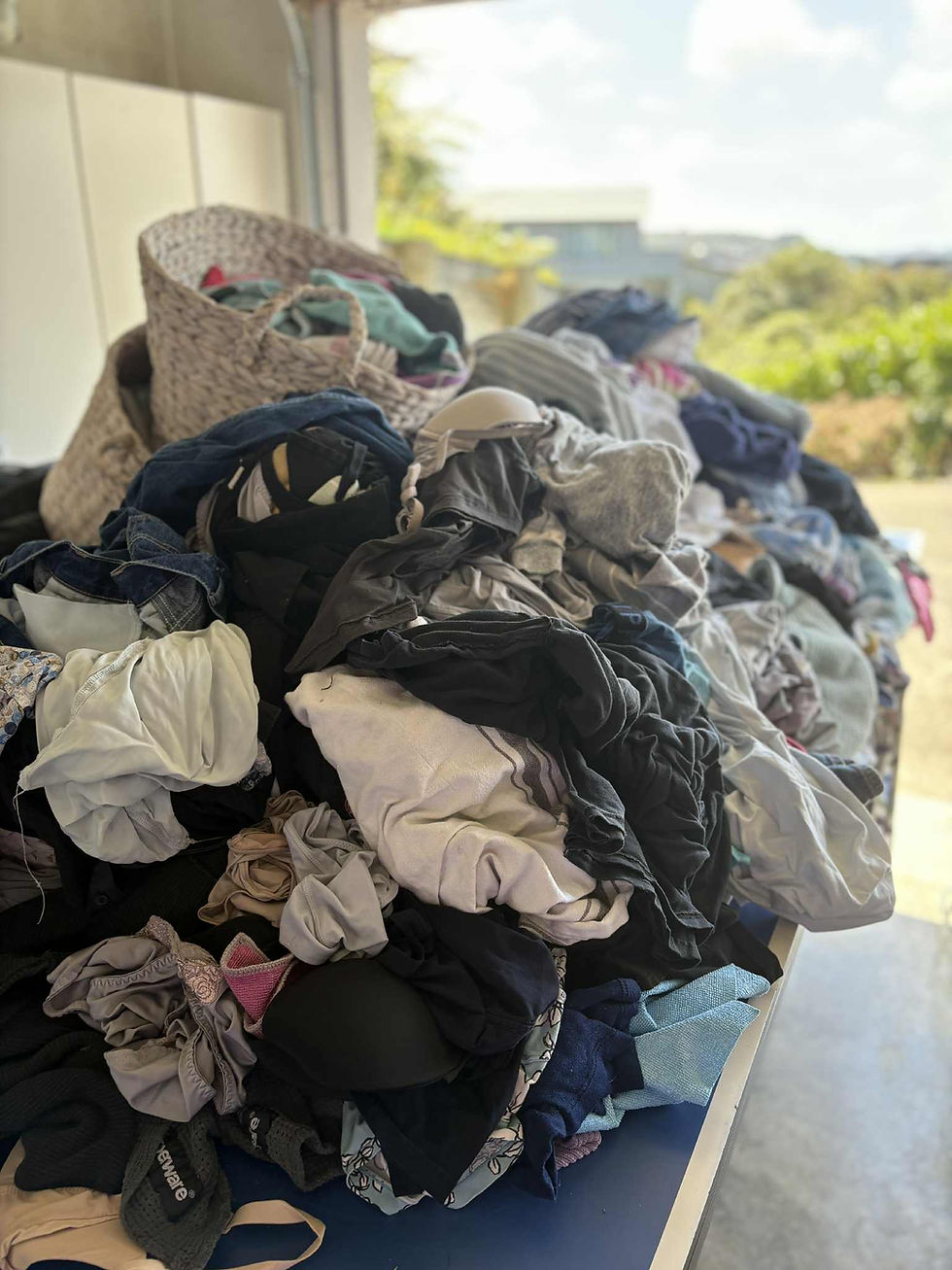
Forgetfulness, time-blindness, and distractibility? That’s me to a T. I’ll go to do the washing, start gathering up laundry from around the house, and then get completely sidetracked. I’ll walk into a bedroom with the intention of grabbing clothes, notice the bed isn’t made, and before I know it, I’m straightening duvets and fluffing pillows. Meanwhile, the washing machine sits empty - and my “Mount Washmore,” as my family call it, grows by the day. It’s forever out of control.
ADHD disorganisation around food looks very similar:
• Forgetting to eat, then being ravenous.
• Forgetting what I bought, then wasting food.
• Getting paralysed by meal prep because it feels like 20 steps at once.
. Starting to meal plan, getting distracted, and completely forgetting
It often feels like those 100 tabs in my brain are all screaming at once - and instead of picking one to focus on, I freeze. That’s executive dysfunction in action.

The solution for me has been visibility and simplicity.
• See-through containers in the fridge.
• Salads prepped in clear bowls so I can see them.
• Chia pots bulk prepped in glass jars.
• Buddy support and group check-ins so I don’t just “forget” my fundamentals and commitments.
• Tick list and charts, visual reminders everywhere.
Without these systems, my ADHD wiring wins every time.
⸻
Emotional Eating and ADHD: Why Feelings Trigger Food
My emotions used to be all or nothing - big highs, big lows. Stress, shame, and frustration were often soothed with food.
I’d binge after a stressful meeting, graze through boredom, or eat to celebrate. Then the flood of guilt would hit me, which would trigger another round of eating.
" Food is no longer my only way to soothe, and it’s definitely not my go-to!"

Now, I’ve built tools for emotional regulation:
• Breathing exercises to calm my nervous system.
• Walking my dogs (yes, sometimes in matching pink puffers).
• My daily soak in a hot bath. More than once if required.
• Journaling my “glimmers”, small daily wins that help regulate my emotions without food.
ADHD and Self-Esteem: Silencing the Inner Critic
Growing up with ADHD, I often heard: “You’re lazy. You never finish anything. Why can’t you just stick to it?” Sister Eileen repeatedly told me, “I was stupid and would amount to nothing” That criticism didn’t just bounce off - it sunk in deep. I learned to mask and cover up my inadequacies - somehow I pushed and scraped through, but not unscathed.
As an adult, my inner critic became the loudest voice in my head:
• “You’ll just regain the weight.”
• “You never follow through.”
• “You can’t trust yourself.”
• “What’s the point? You can’t stick to anything.”
• “You’re not as good as everyone else”
That shame fuelled more overeating, which fuelled more shame.
" What changed for me was learning that my ADHD wasn’t about weakness. It wasn’t a character flaw. It was about wiring. No more pushing through and battling with myself."
Instead of fighting my brain, I started working with it. Coaching, community, and tools helped me replace self-criticism with self-compassion. Doing the inner work does work!
⸻
Finding Your Own Way Forward
If any of this resonates, please know you’re not weak, broken, or hopeless. You simply have a brain that needs different strategies.
• Build visible systems that make healthy choices easy.
• Use rewards, challenges, and curiosity to spark interest.
• Lean on buddies and group support for accountability.
• Practise nervous system regulation tools to ride emotional waves.
• And speak to yourself with compassion, not criticism.
Self sabotaging and mindless munching isn’t a flaw. It’s often an ADHD symptom. And when you understand the “why,” you can finally create a “how” that actually works for you.
It’s a bit like my Mount Washmore - it doesn’t disappear overnight … but it will happen. With systems, routines, and support, I can keep the pile from taking over. ADHD and overeating work the same way: you don’t have to conquer everything at once.
You just need tools that work with your wiring, so you can make progress one small load at a time.
If you’re ready to find strategies that actually fit you, let’s work together to make that progress happen.
Sonia McIndoe
Mind Empowerment
www.mindempowerment.co.nz
027 4433582
Join me for a free webinar!
So, I’ll leave you with a warm invitation to my 8 Fundamentals FREE webinar where I share my daily to-do list and how I actually manage my bariatric journey day by day.
It’s in an ‘hour of power’ where I squeeze a lot of valuable information for you into the 60 minutes on Zoom - totally for free.
Ready for more? Let's do the groundwork together in small group coaching via Zoom, so you can join from anywhere in New Zealand.
About Sonia McIndoe

Hi! I'm Sonia, a NZ Bariatric Life Coach, who has had weight loss surgery and maintained a 70kg weight loss for over a decade. I walk the walk and have dealt with my own regain by continuing to use and hone my own fundamentals and strategies, which I share with you. Like you, I struggled with my weight...

I actually struggled with my weight my entire life. At 5 years of age my ballet teacher told me “I danced like a baby elephant”. I yo-yo dieted my way to a body I loathed and had given up on. Food was my friend - but it was a love/hate relationship. In many ways it saved me, but it was also slowly killing me.
I wasn’t convinced even Weight Loss Surgery would work for me … why would it when nothing else had!
More than 10 years post Weight Loss Surgery later and still several dress sizes smaller, I am the happiest I have ever been.

You can have the success you dream of too. I am so passionate about sharing how, that I work full time as a Bariatric Coach.
I credit my Weight Loss Surgery with my 70kg weight loss, but keeping it off, I credit to doing the mind work. It’s this mind work that I teach in my Mind Empowerment coaching programmes.

The Mind Empowerment Programme
Sonia McIndoe's coaching programme is called Mind Empowerment and starts with a free one hour webinar, "The 8 Fundamentals for Bariatric Success".
The next stage is "Mind Empowerment" group coaching by Zoom, followed by Stay on Track.
One on one individual coaching is also available. Sonia coaches live via Zoom, so you can be anywhere in New Zealand and access help from her as your weight loss coach.
Find out more at www.mindempowerment.co.nz

